Monday, October 4, 2021

How The Filthy Rich Criminal Elite Hide Their Ill-Gotten Wealth


Russian President Vladimir Putin's inner circle shuffled as much as $US2 billion ($2.7 billion) through shadow companies using a network of law firms and banks that helps billionaires, celebrities, politicians, fraudsters and drug traffickers hide their wealth, confidential documents show.


One of the biggest leaks of confidential financial information in history, obtained in a global investigation by media organisations including The Australian Financial Review, reveals the inside workings of a shadowy financial system that allows the wealthy and powerful to shift capital around the world where governments and tax agencies can't find it.

The 11.5 million files expose offshore companies controlled by the prime ministers of Iceland and Pakistan, the king of Saudi Arabia and the children of the President of Azerbaijan. They include at least 33 people and companies blacklisted by the US government because of evidence that they've done business with Mexican drug lords, terrorist organisations like Hezbollah or rogue nations like North Korea and Iran.
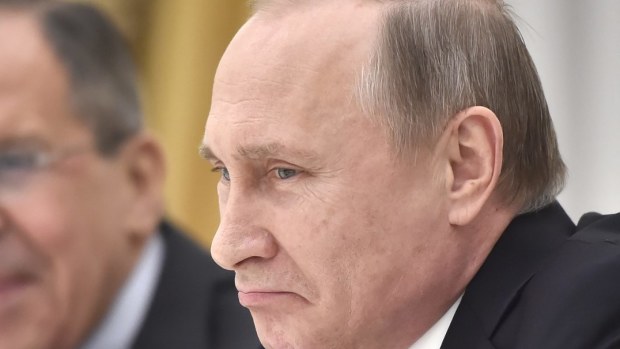
Russian President Vladimir Putin's associates made an appearance in Panama Papers. AP

The leaked records come from an obscure law firm based in Panama, Mossack Fonseca, one of the world's top creators of shell companies, corporate structures that can be used to hide ownership of assets. The documents were investigated by the International Consortium of Investigative Journalists, German newspaper Süddeutsche Zeitung and more than 100 other news organisations, including the Financial Review.

The documents reveal major banks are big drivers behind the creation of hard-to-trace companies in the British Virgin Islands, Panama and other tax havens. The files list more than 15,600 paper companies that banks set up for clients who want to keep their finances under wraps, including thousands created by international banks UBS and HSBC.


Most of the services the offshore industry provides are legal if used by the law-abiding. But the documents show that banks, law firms and other offshore players often failed to follow legal requirements that they make sure their clients are not involved in criminal enterprises, tax dodging or political corruption. In some instances, the files show, offshore middlemen have protected themselves and their clients by concealing suspect transactions or manipulating official records.

"These findings show how deeply ingrained harmful practices and criminality are in the offshore world," said Gabriel Zucman, an economist at the University of California at Berkeley and author of The Hidden Wealth of Nations: The Scourge of Tax Havens.

Zucman said the release of the leaked documents should prompt governments to seek "concrete sanctions" against countries and institutions that peddle offshore secrecy.

The records reveal a pattern of covert manoeuvres by banks, companies and people tied to the Russian president. The records show offshore companies linked to this network moving money in transactions as large as $US200 million ($260.8 million) at a time. Putin associates disguised payments, backdated documents and gained hidden influence within the country's media and automotive industries, the leaked files show.
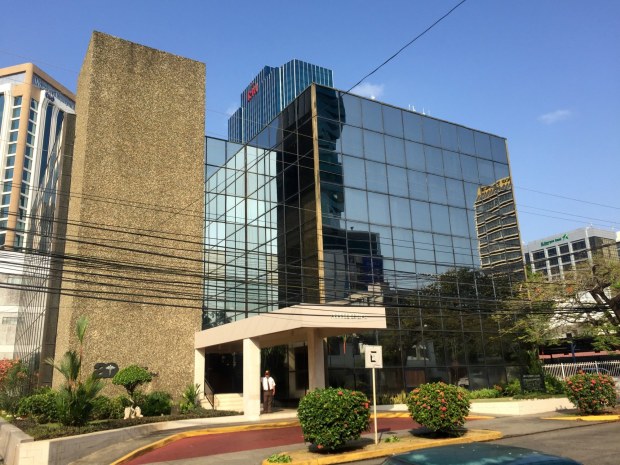
The Mossack Fonseca building in Panama.

A Kremlin spokesman did not answer questions for this story, but instead went public March 28 with charges that ICIJ and its media partners were preparing a misleading "information attack" on Putin and people close to him

World leaders who have embraced anti-corruption platforms feature in the leaked documents. The files reveal offshore companies linked to the family of China's top leader, Xi Jinping, who has vowed to fight "armies of corruption", as well as Ukrainian President Petro Poroshenko, who has positioned himself as a reformer in a country shaken by corruption scandals. The files also contain new details of offshore dealings by the late father of British Prime Minister David Cameron, a leader in the push for tax-haven reform.

The leaked data covers nearly 40 years, from 1977 through to the end of 2015. It allows a never-before-seen view inside the offshore world — providing a day-to-day, decade-by-decade look at how dark money flows through the global financial system, breeding crime and stripping national treasuries of tax revenues.

The data includes emails, financial spreadsheets, passports and corporate records revealing the secret owners of bank accounts and companies in 21 offshore jurisdictions, from Nevada to Singapore to the British Virgin Islands.

An unprecedented investigation into more than 9 million secret files has exposed the hidden underground of the world economy, a network of banks, law firms and other middlemen that hides extraordinary – and often illegal – wealth. Reuters

In Iceland, the leaked files show how Prime Minister Sigmundur David Gunnlaugsson and his wife secretly owned an offshore firm that held millions of dollars in Icelandic bank bonds during that country's financial crisis.
Criminal connections

The files include a convicted money launderer who claimed he had arranged a $50,000 illegal campaign contribution used to pay the Watergate burglars, 29 billionaires featured in Forbes Magazine's list of the world's 500 richest people, and movie star Jackie Chan, who has at least six companies managed through the law firm.

As with many of Mossack Fonseca's clients, there is no evidence that Chan used his companies for improper purposes. Having an offshore company isn't illegal. For some international business transactions, it's a logical choice.

The Mossack Fonseca documents indicate, however, that the firm's customers have included Ponzi schemers, drug kingpins, tax evaders and at least one jailed sex offender. A US businessman convicted of travelling to Russia to have sex with underage orphans signed papers for an offshore company while he was serving his prison sentence in New Jersey, the records show.


The files contain new details about major scandals ranging from England's most infamous gold heist to the bribery allegations convulsing FIFA, the body that rules international soccer.

The leaked documents reveal that the law firm of Juan Pedro Damiani, a member of FIFA's ethics committee, had business relationships with three men who have been indicted in the FIFA scandal – former FIFA vice-president Eugenio Figueredo and Hugo and Mariano Jinkis, the father-son team accused of paying bribes to win broadcast rights to Latin American soccer events. The records show that Damiani's law firm in Uruguay represented an offshore company linked to the Jinkises and seven companies linked to Figueredo.

In response to the reporting by ICIJ and its media partners, FIFA's ethics panel has launched a preliminary investigation into Damiani's relationship to Figueredo. A spokesman for the committee said Damiani first informed the panel about his business ties to Figueredo on March 18. That was one day after the reporting team sent questions to Damiani about his law firm's work for companies tied to the former FIFA vice president.

The world's top soccer player, Lionel Messi, is named.The records show Messi and his father were owners of a Panama company, Mega Star Enterprises Inc. His offshore dealings are currently the target of a tax evasion case in Spain.


Mossack Fonseca's fingers are in Africa's diamond trade, the international art market and other businesses that thrive on secrecy. The firm has serviced enough Middle East royalty to fill a palace. It's helped two kings, Mohammed VI of Morocco and King Salman of Saudi Arabia, take to the sea on luxury yachts. The law firm's leaked internal files contain information on 214,488 offshore entities connected to people in more than 200 countries and territories.

Whether they're famous or unknown, Mossack Fonseca works aggressively to protect its clients' secrets. In Nevada, the records show, the law firm tried to shield itself and its clients from the fallout from a legal action in US District Court by removing paper records from its Las Vegas branch and having its tech gurus wipe electronic records from phones and computers.

The leaked files show the firm regularly offered to backdate documents to help its clients gain advantage in their financial affairs. It was so common that in 2007 an email exchange shows firm employees talking about establishing a price structure – clients would pay $US8.75 for each month farther back in time that a corporate document would be backdated.

In a written response to questions, the law firm said it "does not foster or promote illegal acts. Your allegations that we provide shareholders with structures supposedly designed to hide the identity of the real owners are completely unsupported and false."

Backdating of documents "is a well-founded and accepted practice" that is "common in our industry and its aim is not to cover up or hide unlawful acts", it said.

The firm said it couldn't answer questions about specific customers because of its obligation to maintain client confidentiality.

The law firm's co-founder, Ramón Fonseca, told Panamanian television that the firm was like a "car factory" whose liability ends once the car is produced. Blaming Mossack Fonseca for what people do with their companies would be like blaming a car maker "if the car was used in a robbery", he said.

The International Consortium of Investigative Journalists will release the full list of companies and people linked to the firm in early May.
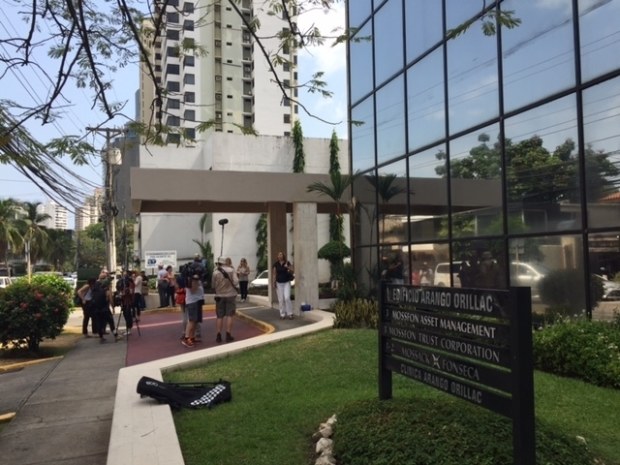
The sleek and non-transparent Mossack Fonseca building in Panama City.

Until recently, Mossack Fonseca has largely operated in the shadows. But it has come under growing scrutiny as governments have obtained partial leaks of the firm's files and authorities in Germany and Brazil began probing its practices.

In February 2015, Süddeutsche Zeitung reported that German law-enforcement agencies had launched a series of raids targeting one of the country's biggest banks, Commerzbank, in a tax-fraud investigation that authorities said could lead to criminal charges against Mossack Fonseca employees.

In Brazil, the law firm has become a target in a bribery and money laundering investigation dubbed "Operation Car Wash" ("Lava Jato," in Portuguese), which has led to criminal charges against leading politicians and an investigation of popular former president Luiz Inacio Lula da Silva. The scandal threatens to unseat current President Dilma Rousseff.

In January, Brazilian prosecutors labelled Mossack Fonseca as a "big money launderer" and announced they had filed criminal charges against five employees of the firm's Brazilian office for their role in the scandal.

Mossack Fonseca denies any wrongdoing in Brazil.

The disclosures found inside the law firm's leaked files dramatically expand on previous leaks of offshore records that ICIJ and its reporting partners have revealed in the past four years.

In the largest media collaboration ever undertaken, journalists working in more than 25 languages dug into Mossack Fonseca's inner workings and traced the secret dealings of the law firm's customers around the world. They shared information and hunted down leads generated by the leaked files using corporate filings, property records, financial disclosures, court documents and interviews with money laundering experts and law-enforcement officials.

Reporters at Süddeutsche Zeitung obtained millions of records from a confidential source and shared them with ICIJ and other media outlets. . The news outlets involved in the collaboration did not pay for the documents.

Before Süddeutsche Zeitung obtained the leak, German tax authorities bought a smaller set of Mossack Fonseca documents from a whistleblower, a move that triggered the raids in Germany in early 2015. This smaller set of files has since been offered to tax authorities in the United Kingdom, the United States and other countries, according to sources with knowledge of the matter.

The larger set of files obtained by the news organisations offers more than a snapshot of one law firm's business methods or a catalog of its more unsavory customers. It allows a far-reaching view into an industry that has worked to keep its practices hidden – and offers clues as to why efforts to reform the system have faltered.

The story of Mossack Fonseca is, in many ways, the story of the offshore system itself.
Crime of the Century

Before dawn on Nov. 26, 1983, six robbers slipped into the Brink's-Mat warehouse at London's Heathrow Airport. The thugs tied up the security guards, doused them in gasoline, lit a match and threatened to set them afire unless they opened the warehouse's vault. Inside, the thieves found nearly 7000 gold bars, diamonds and cash.

"Thanks ever so much for your help. Have a nice Christmas," one of the crooks said as they departed.

British media dubbed the heist the "Crime of the Century." Much of the loot – including the cash reaped by melting the gold and selling it – was never recovered.

Where the missing money went is a mystery that continues to fascinate students of England's underworld.

Mossack Fonseca's files reveal that the law firm and its co-founder, Jürgen Mossack, may have helped the conspirators keep the spoils out of the hands of authoritiesby protecting a company tied to Gordon Parry, a London wheeler-dealer who laundered money for the Brink's-Mat plotters.

Sixteen months after the robbery, the records show, Mossack Fonseca set up a Panama shell company called Feberion for Gordon Parry, a London wheeler-dealer who laundered money for the Brink's-Mat plotters. Jürgen Mossack was listed as one the company's three "nominee" directors, a term used in the business for stand-ins who control a company on paper but exercise no real authority over its activities.

An internal memo written by Mossack shows he was aware in 1986 that the company was "apparently involved in the management of money from the famous theft from Brink's-Mat in London. The company itself has not been used illegally, but it could be that the company invested money through bank accounts and properties that was illegitimately sourced".

Mossack Fonseca records from 1987 make it clear that Parry was behind Feberion.

After police obtained the two certificates that controlled the company's ownership, Mossack Fonseca arranged for Feberion to issue 98 new shares, a move that appears to have effectively wrested control away from investigators, the leaked records show.

It was not until 1995 – three years after Parry was sentenced to a decade in prison for his role in the theft – that Mossack Fonseca ended its business relationship with Feberion.

A spokesman for the law firm said any allegations the firm helped shield the proceeds of the Brink's-Mat robbery "are entirely false." The spokesman said Jürgen Mossack "never had any dealings" with Parry and was never contacted by police about the case.

In its efforts to protect Feberion, the shell company linked to the Brink's-Mat gold heist, Mossack Fonseca used the services of a Panama-based firm, Chartered Management Company, run by Gilbert R.J. Straub, an American expatriate who played a cameo role in the Watergate scandal.

In 1987, as UK police were investigating the shell company, Jürgen Mossack and Fiberion's other on-paper directors resigned, with the understanding they would be replaced by new directors appointed by Straub's Chartered Management, the secret files show.

Straub was eventually caught in a US Drug Enforcement Administration sting that was unrelated to the Brink's-Mat case, according to Mazur, the former undercover agent. Mazur built the case that led Straub to plead guilty to money laundering in 1995. During Mazur's deep-cover stint, Mazur said, Straub tried to establish his criminal bona fides by describing how he'd illegally chaneled cash to President Nixon's 1972 re-election campaign.
Protecting clients

Mossack Fonseca's defence of the dodgy company illustrates how far many offshore operatives will go to serve their customers' interests.

The offshore system relies on a sprawling global industry of bankers, lawyers, accountants and other middlemen who work together to protect their clients' secrets. These secrecy experts use anonymous companies, trusts and other paper entities to create complex structures that can be used to disguise the origins of dirty money.

"They are the gasoline that runs the engine," said Robert Mazur, a former US drug agent and author of The Infiltrator: My Secret Life Inside the Dirty Banks Behind Pablo Escobar's Medellín Cartel. "They're an extraordinarily important piece of the formula of success for criminal organisations."

Mossack Fonseca told ICIJ that it follows "both the letter and spirit of the law. Because we do, we have not once in nearly 40 years of operation been charged with criminal wrongdoing."

The men who founded the firm decades ago – and continue today as its main partners – are well-known figures in Panamanian society and politics.

Jürgen Mossack is a German immigrant whose father sought a new life in Panama for his family after serving in Hitler's Waffen-SS during World War II. Ramón Fonseca is an award-winning novelist who has worked in recent years as an adviser to Panama's president. He took a leave of absence as a presidential adviser in March after his firm was implicated in the Brazil scandal and ICIJ and its partners began to ask questions about the firm's practices.

From its base in Panama, one of the world's top financial secrecy zones, Mossack Fonseca seeds anonymous companies in Panama, the British Virgin Islands and other financial havens.

The law firm has worked closely with big banks and big law firms in places like The Netherlands , Mexico, the United States and Switzerland, helping clients move money or slash their tax bills, the secret records show.

An ICIJ analysis of the leaked files found that more than 500 banks, their subsidiaries and branches worked with Mossack Fonseca since the early 1990s to help clients use offshore companies. UBS set up more than 1100 offshore companies through Mossack Fonseca. HSBC and its affiliates created more than 2300.

In all, the files indicate Mossack Fonseca worked with more than 14,000 banks, law firms, company incorporators and other middlemen to set up companies, foundations and trusts for customers, the records show.

Mossack Fonseca says these middlemen are its true clients, not the eventual customers who use offshore companies. The firm says these middlemen provide additional layers of oversight for reviewing new customers. As for its own procedures, Mossack Fonseca says they often exceed "the existing rules and standards to which we and others are bound."
Reforming the secret world

In 2013, British Prime Minister David Cameron urged his country's overseas territories – including the British Virgin Islands – to "get our own houses in order" and join the fight against tax evasion and offshore secrecy. He could have looked no further than his late father to see how challenging that would be.

Ian Cameron, a stockbroker and multimillionaire, was a Mossack Fonseca client who used the law firm to shield his investment fund, Blairmore Holdings, from British taxes.

The fund's name came from Blairmore House, his family's ancestral country estate. Mossack Fonseca registered the investment fund in Panama even though many of its key investors were British. Ian Cameron controlled the fund from its birth in 1982 until his death in 2010.

A prospectus for investors said the fund "should be managed and conducted so that it does not become resident in the United Kingdom for United Kingdom taxation purposes".

The fund did this by using untraceable certificates of ownership known as "bearer shares" and by employing "nominee" company officers based in the Bahamas, the law firm's leaked records show.

Ian Cameron's tax-haven history is an example of how deeply offshore secrecy is woven into the lives of political and financial elites around the world. It's also an important economic engine for many countries. The weight of that self-interest has made reform difficult.

In the US, for example, states like Delaware and Nevada, which have allowed company owners to remain anonymous, continue to fight against efforts to require greater corporate transparency.

Mossack Fonseca's home country, Panama, has refused to embrace a plan for worldwide exchange of information about bank accounts – out of concern that its offshore industry could be left at a disadvantage. Panama officials say they will exchange information, but on a more modest scale.

The challenge that reformers and law enforcers face is how to find and stop criminal behaviour when it's buried beneath layers of secrecy. The most effective tool for breaking through this secrecy has been leaks of offshore documents that have dragged hidden dealings into the open.

Document leaks uncovered by ICIJ and its media partners have prompted legislation and official investigations in dozens of countries – and fanned fears among offshore customers who worry their secrets will be revealed.

In April 2013, after ICIJ released its "Offshore Leaks" stories based on confidential documents from the British Virgin Islands and Singapore, some Mossack Fonseca customers emailed the firm looking for reassurance that their offshore holdings were safe from scrutiny.

Mossack Fonseca told customers not to worry. It said its commitment to its clients' privacy "has always been paramount, and in this regard your confidential information is stored in our state-of-the-art data centre, and any communication within our global network is handled through an encryption algorithm that complies with the highest world-class standards".

The Panama Papers - Read more:
Tax Office targets 800 Australians in global tax haven probe
NZ - the quiet tax haven achiever
ANZ was the leading Australian bank in Mossack's universe
Secrets of Mossack Fonseca & Co
How the one per centers divorce
Records reveal money network tied to Putin
Leak ties ethics guru to three men charged in FIFA scandal

Part 1: How The Filthy Rich Hide Their Ill-Gotten Wealth

 Everybody knows what a “Swiss bank account” is. Hollywood tells us they’re top-secret safety deposit boxes for the world’s elite — places where drug kingpins and bankers and politicians and heirs hide their fortunes from government investigations and taxation. They’re how the super rich do banking.

Now, thanks to one whistleblower and a team of 140 journalists from around the world, we know a lot more about these accounts and the people who hold them.

We know more about how Swiss banking has helped the richest people in the world to accumulate and protect their every growing share of the world’s total wealth. We know how banks have helped drug traffickers, arms dealers, and terrorists to launder money and create financial infrastructures that have made them less like criminal gangs operating in dirty cash and more like global criminal enterprises earning interest, making investments, and sending wire transfers. And we know more about how corrupt governments, government officials, and political leaders have embezzled money and robbed the people they’re meant to serve.

Here’s how we know all this.

In 2009, Hervé Falciani, an IT worker at the British bank HSBC leaked information to French tax investigators that showed HSBC had been stashing clients’ funds in its Swiss subsidiary, HSBC Private Bank. French newspaper Le Monde got ahold of the information in 2014 and set up a collaboration with the the Washington DC-based International Consortium of Investigative Journalists (ICIJ). The new partners recruited a team of investigative journalists from over 45 countries to mine the data, which relates to over 100,000 banking clients in 200 countries, and find the stories.

On Feb. 8, the ICIJ launched its interactive report: “Swiss Leaks.”


“Swiss Leaks” has three main sections: Countries, People, and Stories. Each does something different, and each is deeply troubling in its own way.


Countries

“Countries” gives you the meta-level picture of where the money was coming from — how much money from each country and how many banking clients per country. (You can see that information in graphic form throughout this article.)

People

The “People” section of the report includes profiles of 65 public figures connected to HSBC Swiss accounts. (It’s a sample of the larger data. In its written report, ICIJ discusses many other people.)

You’ll learn, for example, that Mexican billionaire Carlos Hank Rohn was the beneficial owner of 10 bank accounts listed to “Hmex Pte. Ltd” that held a total of around $158 million in 2006/2007.

You’ll also learn that King of Jordan, Abdullah II ibn al-Hussein, was connected to an account opened in the name of a person ICIJ identifies as a “senior palace official.” It held $41.8 billion in 2006/2007.  

And there’s plenty more info on arms traffickers, diamond dealers, politicians, sports figures, corporate executives, and celebrities — a pretty diverse crew of people who share one thing in common. They are super rich.


Read “People” carefully, though. Not every person with an HSBC Swiss account is evading taxes and laundering money, as ICIJ notes. Several people responded to ICIJ’s request for comment with compelling explanations.

Take British musician Phil Collins. He’s listed. Bad look, right? Not when you ask Collins’ manager, who explained to ICIJ that the singer actually lives in Switzerland and that “It is entirely appropriate for him to have a bank account where he lives.”

Another example: Australian supermodel Elle Macpherson. She’s been the beneficial owner of several client accounts linked to over two dozen bank accounts. In 2006/2007 those accounts held $12.2 million. Tax dodger? Maybe not. “Ms. MacPherson is an Australian citizen,” her lawyers told ICIJ, and she has “accounted for UK tax on the basis of full disclosure in accordance with UK law.”

One lesson from Swiss Leaks is that each HSBC account is a story worth investigating.


Sunday, October 3, 2021

FDA: More Evil Than Trump More Deadly Than War


Risky Drugs: Why The FDA Cannot Be Trusted

by Donald W. Light

forthcoming article for the special issue of the Journal of Law, Medicine and Ethics (JLME), edited by Marc Rodwin and supported by the Edmond J. Safra Center for Ethics, presents evidence that about 90 percent of all new drugs approved by the FDA over the past 30 years are little or no more effective for patients than existing drugs.

All of them may be better than indirect measures or placebos, but most are no better for patients than previous drugs approved as better against these measures. The few superior drugs make important contributions to the growing medicine chest of effective drugs.

The bar for “safe” is equally low, and over the past 30 years, approved drugs have caused an epidemic of harmful side effects, even when properly prescribed. Every week, about 53,000 excess hospitalizations and about 2400 excess deaths occur in the United States among people taking properly prescribed drugs to be healthier. One in every five drugs approved ends up causing serious harm,1 while one in ten provide substantial benefit compared to existing, established drugs. This is the opposite of what people want or expect from the FDA.

Prescription drugs are the 4th leading cause of death. Deaths and hospitalizations from over-dosing, errors, or recreational drug use would increase this total. American patients also suffer from about 80 million mild side effects a year, such as aches and pains, digestive discomforts, sleepiness or mild dizziness.

The forthcoming article in JLME also presents systematic, quantitative evidence that since the industry started making large contributions to the FDA for reviewing its drugs, as it makes large contributions to Congressmen who have promoted this substitution for publicly funded regulation, the FDA has sped up the review process with the result that drugs approved are significantly more likely to cause serious harm, hospitalizations, and deaths. New FDA policies are likely to increase the epidemic of harms. This will increase costs for insurers but increase revenues for providers.

This evidence indicates why we can no longer trust the FDA to carry out its historic mission to protect the public from harmful and ineffective drugs. Strong public demand that government “do something” about periodic drug disasters has played a central role in developing the FDA.2 Yet close, constant contact by companies with FDA staff and officials has contributed to vague, minimal criteria of what “safe” and “effective” mean. The FDA routinely approves scores of new minor variations each year, with minimal evidence about risks of harm. Then very effective mass marketing takes over, and the FDA devotes only a small percent of its budget to protect physicians or patients from receiving biased or untruthful information.34 The further corruption of medical knowledge through company-funded teams that craft the published literature to overstate benefits and understate harms, unmonitored by the FDA, leaves good physicians with corrupted knowledge.5 6 Patients are the innocent victims.

Although it now embraces the industry rhetoric about “breakthrough” and “life-saving” innovation, the FDA in effect serves as the re-generator of patent-protected high prices for minor drugs in each disease group, as their therapeutic equivalents lose patent protection. The billions spent on promoting them results in the Inverse Benefit Law: the more widely most drugs are marketed, the more diluted become their benefits but more widespread become their risks of harm.

The FDA also legitimates industry efforts to lower and widen criteria prescribing drugs, known by critics as “the selling of sickness.” Regulations conveniently prohibit the FDA from comparing the effectiveness of new drugs or from assessing their cost-effectiveness. Only the United States allows companies to charge what they like and raise prices annually on last year’s drugs, without regard to their added value.7

A New Era?

Now the FDA is going even further. The New England Journal of Medicine has published, without comment, proposals by two senior figures from the FDA to loosen criteria drugs that allege to prevent Alzheimer’s disease by treating it at an early stage.8 The authors seem unaware of how their views about Alzheimer’s and the role of the FDA incorporate the language and rationale of marketing executives for the industry. First, they use the word “disease” to refer to a hypothetical “early-stage Alzheimer’s disease” that supposedly exists “before the earliest symptoms of Alzheimer’s disease are apparent.” Notice that phrasing assumes that the earliest symptoms will become apparent, when in fact it’s only a hypothetical model for claiming that cognitive lapses like not remembering where you put something or what you were going to say are signs of incipient Altzheimer’s disease. The proposed looser criteria would legitimate drugs as “safe and effective” that have little or no evidence of being effective and expose millions to risks of harmful side effects.

No proven biomarkers or clinical symptoms exist, the FDA officials note, but nevertheless they advocate accelerated approval to allow “drugs that address an unmet medical need.” What “unmet need"? None exists. This market-making language by officials who are charged with protecting the public from unsafe drugs moves us towards the 19-century hucksterism of peddling cures of questionable benefits and hidden risks of harm, only now fully certified by the modern FDA.9

The main reason for advocating approvals of drugs for an unproven need with unproven benefits, these FDA officials explain, is that companies cannot find effective drugs for overt Alzheimer’s. Their drug-candidates have failed again and again in trials. The core rationale of the proposed loosening of criteria is that “the focus of drug development has sifted to earlier stages of Alzheimer’s disease…and the regulatory framework under which such therapies are evaluated should evolve accordingly.” Yet they admit there are no “therapies” in this much larger market where (with the help of the industry-funded FDA) companies will not have to prove their drugs are effective. In fact, these FDA officers propose to approve the drugs without ever knowing if they are therapeutic or not. Their commercialized language presumes the outcome before starting. The job of the FDA, it seems, is to help drug companies open up new markets to increase profits for the FDA’s corporate paymasters.

These two FDA officials maintain that “the range of focus must extend to healthy people who are merely at risk for the disease but could benefit from preventive therapies.” Yet they admit we do not know who is “at risk,” nor whether there is a “disease,” nor whether anyone “could benefit,” nor whether the drugs constitute “preventive therapies.” Similar FDA-encouraged shifts have been made for drugs treating pre-diabetes, pre-psychosis, and pre-bone density loss, with few or no benefits to offset risks of harm. This week, based on policy research at the Edmond J. Safra Center for Ethics, a letter of concern was published in the New England Journal of Medicine. The authors write that approval for drugs to treat “early stage Altzheimer’s disease” must meet “a much higher bar – evidence of slowed disease progression.” But without clinical manifestations or biomarkers for an alleged disease, how will such progression be measured?

Advice to readers: Experienced, independent physicians recommend not to take a new drug approved by the FDA until it is out for 7 years, unless you have to, so that evidence can accumulate about its real harms and benefits.10

----

Disclaimer: The assessment and views expressed here are solely the author’s and do not necessarily reflect those of persons or institutions to which he is associated. The comments and suggestions of Gordon Schiff, an expert in prescribing at Brigham and Women’s Hospital, and Robert Whitaker are gratefully acknowledged.

References

1. Lexchin J. New drugs and safety: what happened to new active substances approved in Canada between 1995 and 2010? Archives of Internal Medicine 2012 (Nov 26);172:1680-81.

2. Hilts PJ. Protecting America's Health: The FDA, Business and One Hundred Years of Regulation. New York: Alfred A. Knopf; 2003.

3. Rodwin M. Conflicts of interest, institutional corruption, and Pharma: an agenda for reform. Journal of Law, Medicine & Ethics 2012;40:511-22.

4. Rodwin M. Reforming pharmaceutical industry-physician financial relationships: lessons from the United States, France, and Japan. Journal of Law, Medicine & Ethics 2011(Winter):2-10.

5. Sismondo S. Ghost management. PLoS Medicine 2007;4:1429-33.

6. Sismondo S, Doucet M. Publication ethics and the ghost management of medical publication. Bioethics 2010;24:273-83.

7. Schondelmeyer S, Purvis L. Rx Price Watch Report. Washington DC: American Association of Retired Persons 2012.

8. Kozauer N, Katz R. Regulatory innovation and drug development for early-stage Alzheimer's disease. New England Journal of Medicine 2013 (Mar 13);DOI: 10.1056/NEJMp1302513

9. Young JH. The Toadstool Millionaires: a social history of patent medicines in America before federal regulation. Princeton, NJ: Princeton University Press; 1961.

10. Schiff G, Galanter W, Duhig J, et al. Principles of conservative prescribing. Archives of Internal Medicine 2011;171:1433-30.

Friday, October 1, 2021

Covid 19: The Gift That Keeps On Giving

 United States Coronavirus Cases: 44,320,388 Deaths: 717,007

Chances are by 2022 the virus will become endemic and it will still kill off MAGAts but in smaller numbers. COVID will continue to cull the herd for years to come bringing the US to herd immunity. 

Variants will continue to show up worldwide and COVID spikes and dips are inevitable. There are pockets of MAGAts throughout Trumpistan where cases of COVID will surge. If a variant more virulent than the Delta variant were to emerge a death rate of 5% could be possible. 


COVID 19 hot spots will continue to erupt throughout Trumpistan for years to come. Currently the US is seeing a reported 1500 COVID deaths per day. The actual numbers are probably higher, especially in foul filthy Florida.

Related:

How to Deal with MAGAts. A MAGAt is a brain-dead admirer ...

https://medium.com/@whitfieldlarrabee/how-to-deal-with-magats-eea50d0af0e6

Aug 27, 2018 · A MAGAt is a brain-dead admirer of Donald Trump & his slogan, Make America Great Again. In dealing with MAGAts, it’s best to understand how they are formed. A large number of them have overdosed ...


Thursday, August 26, 2021

Foul Filthy Florida No Longer Reporting COVID 19 Cases and Deaths

 TAMPA (WFLA) – The Florida Department of Health plans to no longer release a daily COVID-19 report of state cases, deaths, and hospitalizations and will now issue a weekly report.


Most recently on Thursday, the Florida Department of Health reported 1,872 new cases, bringing the state’s overall total to 2,329,867 cases since the virus was first detected on March 1, 2020.

More than 10.3 million Floridians have been vaccinated – accounting for more than half of Florida’s eligible population with 85 percent of Florida’s seniors being vaccinated.

COVID-19 case and vaccine reporting will be available on a weekly basis at the state’s Florida Heath website every Friday.

Op Ed: This is good because now even more Filthy Floridians will die.

Friday, August 20, 2021

In Florida and Texas Delta Variant Kicking Ass And Taking Names


The delta variant is 'ripping through the unvaccinated' and crowding hospitals in Florida, Texas


  • For the week ending July 29, 110,477 people tested positive for COVID-19 in Florida, according to state health officials.
  • With more than 1,000 COVID patients at hospitals across its six-county region, Orlando’s AdventHealth has suspended non-emergency operations.
  • A warning from one Texas health expert: "By not getting vaccinated and doing your part, we risk crashing one of the most advanced health care systems in the world.”

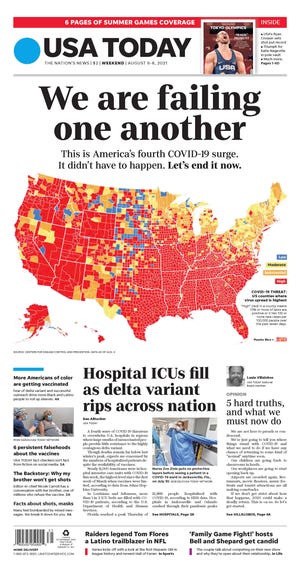
A fourth wave of COVID-19 is threatening to overwhelm U.S. hospitals in regions where large swaths of unvaccinated people provide little resistance to the highly contagious delta variant. 

Nowhere is the strain more apparent than Florida, which reached a new peak Tuesday of 11,515 people hospitalized with COVID-19, according to data from the U.S. Department of Health and Human Services.

Hospitals in Jacksonville and Orlando last week crashed through their pandemic peaks, and hospitals in Miami-Dade County are at or approaching record coronavirus hospitalizations this week, said Mary Mayhew, CEO of Florida Hospital Association.

And cases continue to surge, with 110,477 residents testing positive for the COVID-19 virus for the week that ended July 29, foreshadowing more people needing hospital care in the weeks ahead. 

"The delta variant is ripping through the unvaccinated," Mayhew said. 

This story ran on the front page of USA TODAY Aug. 6, 2021

Across Florida, COVID surge is 'straining our system'

Further stressing hospitals are larger-than-normal volumes of sick people crowding emergency rooms with non-COVID-19 illnesses, Mayhew said. The combination has challenged hospitals' capacity to staff enough nurses, doctors, respiratory therapists and other clinicians to care for the surge of critically ill patients.

With more than 1,000 coronavirus patients at hospitals across its six-county region, Orlando's AdventHealth suspended non-emergency operations last week to free up staff and space. More than 90% of COVID-19 patients at AdventHealth's hospitals are unvaccinated, and the small number of vaccinated patients with COVID-19 typically have underlying conditions such as cancer or autoimmune disease, the hospital said. 

"We have peaked above any previous wave and it is straining our system, our physicians and all of our clinicians," said Neil Finkler, chief clinical officer of AdventHealth's Central Florida division.

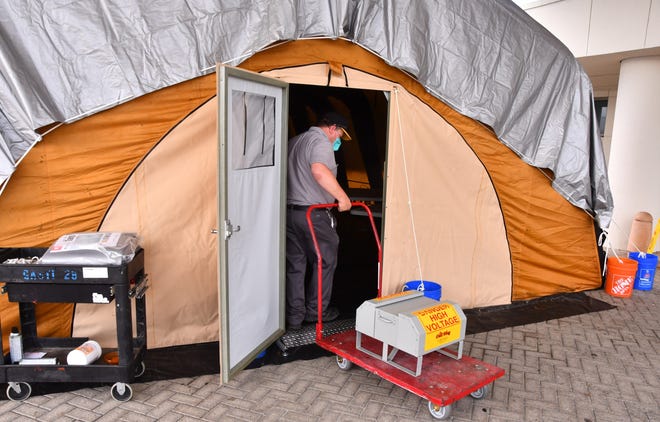
Health First sets up tents outside emergency rooms at Holmes Regional Medical Center and Palm Bay Hospital on July 27 in Florida. The tents will be used to separate people coming to the ER with COVID-19 symptoms from other patients.

"None of these patients thought they would get the virus. But the delta variant has proven to be so highly contagious that even the young and the healthy, including pregnant patients, are starting to fill up our hospitals."

While hospitals from the Northeast to the Southwest set up temporary field hospitals during past surges, Mayhew said Florida hospitals are converting existing hospital space to set up beds. Hospitals are making space in conference rooms, cafeterias and auditoriums. 

Mayhew said converting existing hospital space allows more efficient use of limited staff rather than scrambling to staff a remote field hospital in a parking lot or a convention center. 

Public health officials have called for tougher measures after the CDC last week recommended all K-12 students to wear masks in classrooms. Florida Gov. Ron DeSantis followed with an executive order blocking mask mandates in schools and school districts concluded they can't legally enforce a mask requirement. 

'Every staffed bed' is full at some Texas hospitals

In Texas, hospitals are preparing for the steady rise of COVID-19 hospitalizations that are following rising cases counts. Like in Florida, Texas hospital beds are being filled with unvaccinated COVID-19 patients, said Angela G. Clendenin, a professor at Texas A&M School of Public Health.

While previous COVID-19 waves mainly involved older and middle-aged adults with existing health conditions, the new wave is claiming young adults in their 20s and 30s who need breathing machines in hospital intensive care units, Clendenin said.

When will everyone be vaccinated for COVID-19? Here's how the vaccine rollout is going

Back to school, in masks? What you need to know for fall 2021

The result is that hospitals are again preparing for or enacting surge plans to convert medical wings into intensive care units, she said. 

"By not getting vaccinated and doing your part, we risk crashing one of the most advanced health care systems in the world," Clendenin said.

Wednesday, August 18, 2021

Non Profits Exploiting The Disabled For Profit

Jesus Christ just did another facepalm. We the people expect that corporations will do unscrupulous things to the peasants. This is a given but some corporations are good corporate citizens. This is because of the threat of Qui Tam. Non profits on the other hand fly under the RADAR. They are of little interest to national news and they are often mobbed up with local affiliate in a quid pro quo arrangement. 

Like everything else medical related, disabled people are exploited for maximum profit and while some non profits are sincere in helping the disabled others are not. Transparency is often lacking and employee exploitation tends to be the rule rather than the exception. One glaring example of that is RCIL Resource Center For Independent Living in Utica NY. 


Dozens of red flags when up when one of our investigative reporters started asking questions and digging deeper into the goings on at RCIL. How deep the corruption goes is not known at this time but when there is complete lack of transparency it usually indicates an abyss of wrong doing. The unwillingness of staff to even give a member of the public the names of the members of the board of directors triggered an impromptu transparency audit from our citizen/journalist investigator. RCIL failed and failed miserably. 

At this point, there is no call to action by our readers or network partners as Fat Bastardo of Bigger Fatter Politics has suggested but there are PINAC auditors in the area that will audit RCIL unannounced. The following few paragraphs explains the sinister nature of parasite entities such are RCIL. 

THE NON-PROFIT sector in the U.S. is a complete scam. Hospitals and other agencies get special breaks on property and income taxes. They plough their earnings into expansion and massive salaries for top executives, just like for-profit companies do.

The competitive dynamic that forces each corporation to accumulate as much capital as possible applies to non-profits just as much as for-profits. Employees for non-profits do the work that produces the funds that pay the CEOs--and are often paid even less than employees at for-profit corporations. So exploitation of workers is often even greater at "non-profit" companies than at for profit companies.

KUOW, a public radio station, did a story on non-profit hospitals in Seattle on July 9: Nurses at "non-profit" Swedish hospital start at around $25 per hour ($50,000 per year) and housekeepers get only $12 an hour, while Swedish CEO Rod Hochman made $ 1.5 million in the first nine months of 2007 alone! Hochman also got $120,000 for relocation expenses, as well as $13,000 for other expenses.

But it's not just Hochman--seven officials at Swedish made at least $1 million per year . Altogether, at least 15 Seattle-area non-profit hospital executives earned $1 million or more a year. These salaries come out of what is, in essence, profit made by the "non-profit" corporation. These high salaries continue as Swedish laid off 200 workers this year. Just like at for-profit companies, the people who do the real work get laid off and the ones who are left get overworked, while the CEOs accumulate more and more.

Workers at "non-profits" and public agencies deserve as much support and solidarity as any other workers. Workers as a whole produce the wealth--whether they work in for-profits, non-profits or government agencies. The wealth they produce keeps the whole economy going--to the benefit of the super-rich, whether they be CEOs or shareholders.

Management at non-profits try to sell workers on the idea that they are producing for the public good--so they should be willing to accept less money. Workers should reject this lying rationale that only serves the interests of management. They are actually working to line the pockets of the managers.

When workers rise up and take ownership and control of the economy they will have to transform the "non-profits" just as much as the "for-profits." They will have to squeeze the profit out of both and create an economy based on human need--instead of one based on profit or "non-profit" accumulation.

RCIL located in the economically depressed Mohawk Valley in Central New York State does it even dirtier than Swedish Hospital in Seattle WA. Along with paying its workers poverty wages, 90% of its workers are part time which means that most of these workers do not have health insurance. For an organization that claims to be a social service organization RCIL only seems to serve itself and it's vendors. 

Fat Bastard's investigation on Parkridge Health in Hendersonville NC and Adventist Health resulted in huge fines but sadly none of the dozen or so criminals were even
but this is New York State that has an aggressive state AG and even more aggressive federal attorneys. Stay tuned to see if another corrupt exploiter of human suffering gets brought to justice.  

Democracies Worldwide Should Execute Trump Trolls and Putin Trolls

 Trump trolls and Putin trolls are committing espionage and therefore they can be treated as spies and executed under the law. When the spre...